
Folsom ZIP Code Directory: Three Postal Roles
Three ZIP codes serve distinct parts of the Folsom postal landscape, but they do not describe one clean municipal boundary. The principal delivery code reaches the historic and developed city, the PO-box code serves a mailing function, and the newer south code follows Folsom Ranch growth. Sacramento County uses different keys for property work: a situs address locates the parcel, an APN identifies the assessment record, and a legal description controls the recorded instrument.
| ZIP Code | Areas Covered | Post Office | Notes |
|---|---|---|---|
| 95630 | Historic and core areas, central, north, and east neighborhoods, plus much suburban Folsom | Folsom retail and delivery offices | Postal routes do not follow the exact city line |
| 95671 | Folsom PO-box service | Folsom PO-box service | Not a residential geographic neighborhood |
| 95763 | Newer Folsom Ranch and south-of-US-50 growth | Postal delivery for south Folsom growth | Verify each address through USPS |
The research does not identify an official public page that lists every boundary or station name. A current street should therefore be checked address by address in the official USPS lookup and against a City or County GIS layer. Commercial ZIP polygons are not a substitute for the parcel jurisdiction field.
The Sacramento County Clerk/Recorder records portal identifies the county custodian when a ZIP question turns into a deed, marriage, or other recorded-document request.
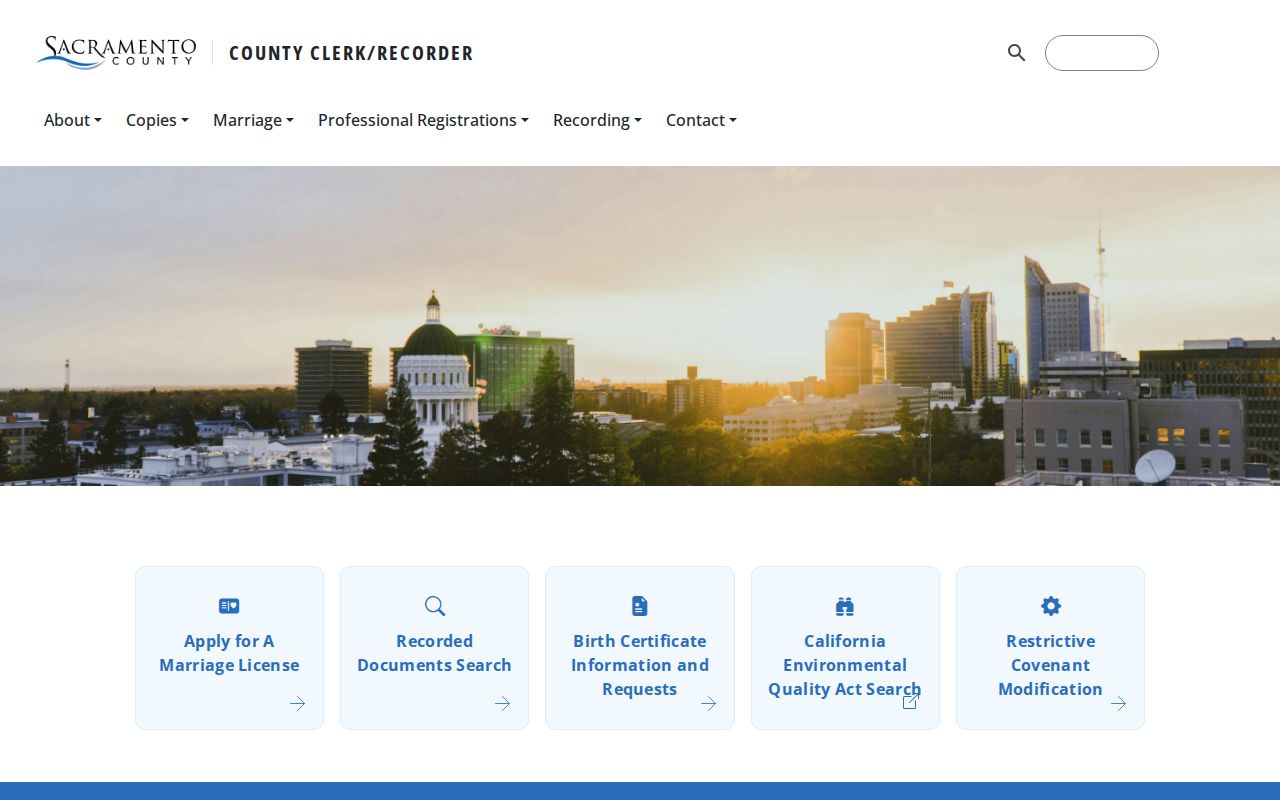
The portal belongs to the county record system, not to a postal boundary map. A ZIP can help frame a request, but the record's legal and jurisdiction keys control the result.
Folsom 95671 PO-Box Service
95671 has a different role from a delivery ZIP. It is identified in the research as Folsom's PO-box ZIP, so it should not be read as a residential neighborhood with a complete street grid. A name or mailing label using 95671 can point to a box service rather than to the situs of a home, parcel, or business. That distinction matters when a resident lookup begins with a postal address.
Use the box address for mail-service context, then ask what underlying record key answers the question. A property search needs an exact situs address, APN, or map location. A recorded document needs the parties, date, document type, or legal description. A voter question must use the person's own identity inputs or a qualified file request. The PO-box ZIP alone cannot bridge those systems.
Do not place 95671 into a ZIP code directory as though it supplied a list of everyone living in a Folsom area. The most accurate entry is a service note: PO-box function, no geographic neighborhood assumption, and address-level confirmation where the postal label matters.
Folsom 95763 South-of-US-50 Growth
95763 marks newer Folsom Ranch and south-of-US-50 growth in the local ZIP geography. The code helps distinguish a newer development context from the older central, north, and east areas associated with 95630. It is a postal clue, not a year-stamped city boundary. No verified ZIP realignment date or citywide renumbering year was located in the official material.
Folsom's geography has more than one vocabulary. The American River, Historic District, older railroad and mining core, master-planned neighborhoods, and Folsom Ranch can appear in maps, permits, directories, and newspaper notices in different ways. A historical resident may be filed under Sacramento County or a settlement name, while a current south-area address may carry 95763. Search the modern ZIP and the older place terms when a family or property trail crosses eras.
For a current address, keep three checks separate: USPS confirms delivery, the Assessor map identifies the parcel and jurisdiction, and local planning or GIS material supplies municipal geography. Those checks give a more reliable ZIP code directory entry than a guessed line on a web map.
Find Folsom Residents by ZIP Code
A ZIP-keyed workflow in Folsom starts with a verified address because no official ZIP-wide owner browse is documented. The Sacramento County Assessor public viewer accepts an address, APN, or map location. It returns parcel geometry, assessed value, limited building facts, jurisdiction, and map links, but owner names are deliberately absent online. The voter system is personal or purpose-restricted, not a street or ZIP directory.
- Check one street address and city through the official USPS lookup. Record the returned delivery ZIP, and do not treat the postal city as proof of incorporated jurisdiction.
- Enter the normalized address in the Sacramento County Assessor Parcel Viewer. If the address fails, try the APN or click the parcel on the map.
- Read the parcel's jurisdiction and APN, then use the County GIS or Folsom planning map to separate municipal geography from postal service geography.
- If a qualified election purpose exists, request only the needed voter geography and fields through the Secretary of State or Sacramento County Elections process. A general ZIP curiosity search is not an authorized voter-file route.
- Once the ZIP is narrowed to a street, use the Folsom street directory for the address-keyed parcel and record chain rather than treating the ZIP as the final search key.
The workflow produces a verified postal clue and a parcel key. It does not create a ZIP-wide list of occupants, and it keeps the owner, mailing, situs, and voter questions in their proper systems.
USPS Checks for a Folsom ZIP Code
The official USPS ZIP Code lookup is the appropriate postal check because the research documents an address or city lookup one record at a time. It verifies delivery routing. It does not expose an owner, APN, legal description, voter status, or municipal boundary. The narrow input model is a strength: it prevents a broad ZIP assumption from replacing the address that actually needs review.
| Lookup key | What it answers | Limit for a Folsom ZIP code directory |
|---|---|---|
| One street address | Which delivery ZIP the address receives | One address at a time; normalize suffixes and unit details |
| City paired with address | How USPS labels the delivery point | Postal city is not the same as city jurisdiction |
| Returned ZIP result | The current postal code for the checked address | It is not an APN, owner record, or household roll |
Use the returned code as a verification step, not as a claim that every nearby parcel shares it. Where a result conflicts with a directory entry, check the live USPS response, the Assessor jurisdiction field, and the address's legal description or recorded document. The public research does not support a complete list of Folsom station names or ZIP boundary streets.
Folsom ZIP Code Boundaries vs City Lines
ZIP boundaries and Folsom city limits answer different questions. A location labeled “Folsom, CA 95630” can be outside the incorporated boundary because USPS assigns delivery geography. A municipal parcel can also carry a preferred delivery label shaped by route conventions. The Assessor Parcel Viewer jurisdiction field is the government-geography test, while USPS is the mail test.
Property records add more boundaries. Situs is the parcel location. A mailing address is where a tax notice goes and may be a PO box, trust, management, or absentee address. An APN is the county parcel identifier. A legal description controls the recorded instrument. Keeping those keys separate prevents a postal result from being mistaken for a title or resident result.
- ZIP versus ZIP+4
- A ZIP code identifies a broad delivery area; the extra four digits narrow a delivery segment or point within that area.
- PO-box ZIP
- A code used for box service. It can describe where mail is collected without describing a residential street geography.
- Unique ZIP
- A code assigned to one high-volume address or institution. No Folsom unique-ZIP example is established in the reviewed research.
- Carrier route
- A postal delivery route used for sorting and service. It is not a city boundary, parcel line, or resident list.
Folsom ZIP Records and CPRA Requests
The public Assessor interface cannot be used as a ZIP-wide owner directory. It is address, APN, and map based, and the online view excludes owner names due to privacy concerns. The secured roll's owner, property address, and mailing address are public through the Assessor counter or a focused request, but the request should identify the APNs or existing records sought rather than ask for an undefined list of residents.
The California Public Records Act provides the fallback for an identifiable existing record. Agencies ordinarily determine within 10 calendar days whether disclosable records exist, with a written 14-day extension for specified unusual circumstances. Direct duplication costs may be charged, but not search or review time unless another law permits a different fee. Exempt material must be segregated, and a denial should identify the exemption and responsible official.
The official CPRA text is the source for the statewide request framework that applies when a parcel or record key is known.
The image belongs with the request fallback, not with a claim that the law creates a ZIP household roll. A narrow request can ask for a named existing record, date range, APN-related field, or other identifiable record held by the custodian.
For election records, the Sacramento County Elections contact page is the local route for questions and counter access.
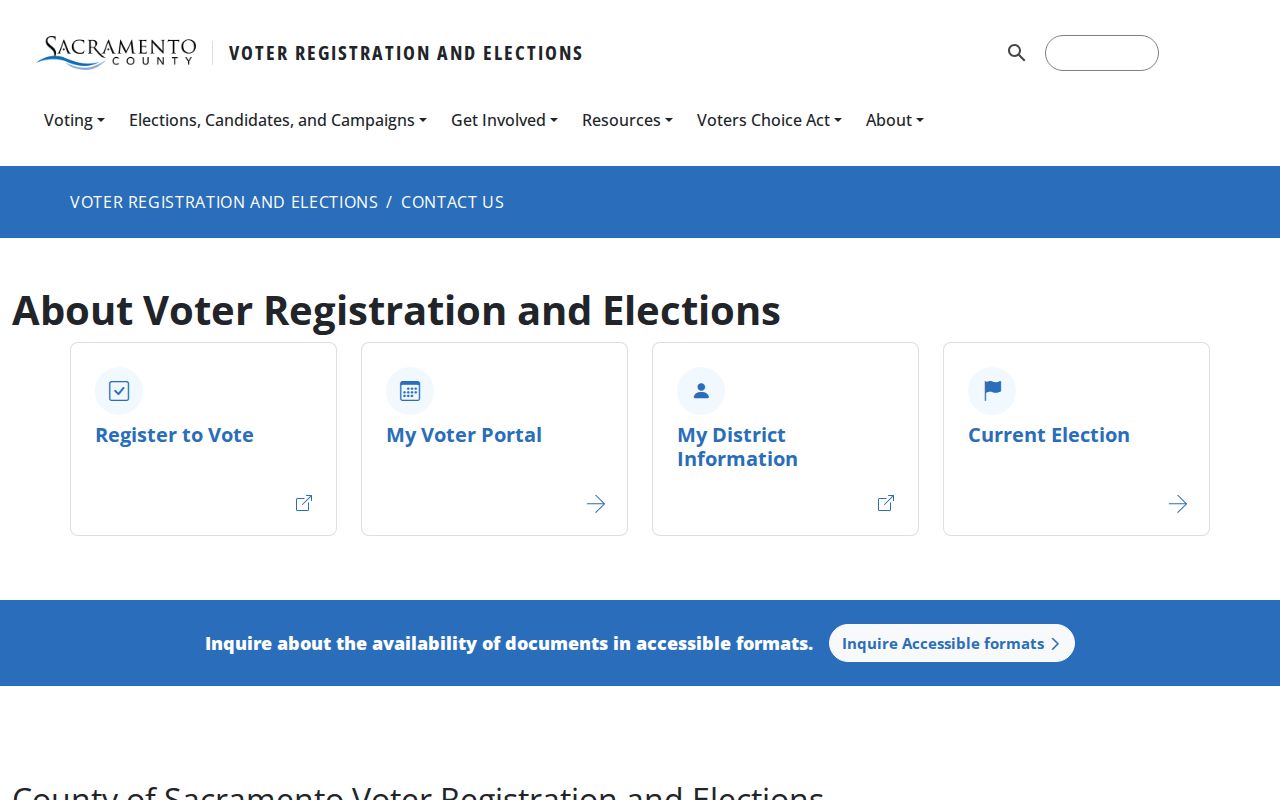
The Elections office is a custodian and contact point, not an open ZIP browser. The requested geography and purpose still control what can be released.
Folsom ZIP Code Privacy Limits
California's My Voter Status tool is an authenticated self-lookup. It asks for first name, last name, date of birth, and a current identity field such as driver-license or ID information or SSN digits. A matched result can show registration status, party preference, districts, polling details, vote-by-mail status, and participation-related information. A no-match means the inputs did not match. It does not prove that a person does not live in Folsom or in a ZIP code.
Elections Code §2194 permits voter information for election, scholarly, journalistic, political, or governmental purposes. Gov. Code §7924.000 protects home street address, phone, email, registration identifiers, prior registration, driver or ID number, SSN or unique ID, and signature except under statutory access. A qualified requester must state purpose and security controls, identify geography and data, sign under penalty, and pay the production charge. The state request instructions list $30 for specific statewide records, up to $100 for specific records. Confidential voters are excluded, and ballot choices are not part of the authorized inventory.
The California voter-file request instructions show why a ZIP code can be a declared geography in a qualified request but cannot become a public-by-name resident list.
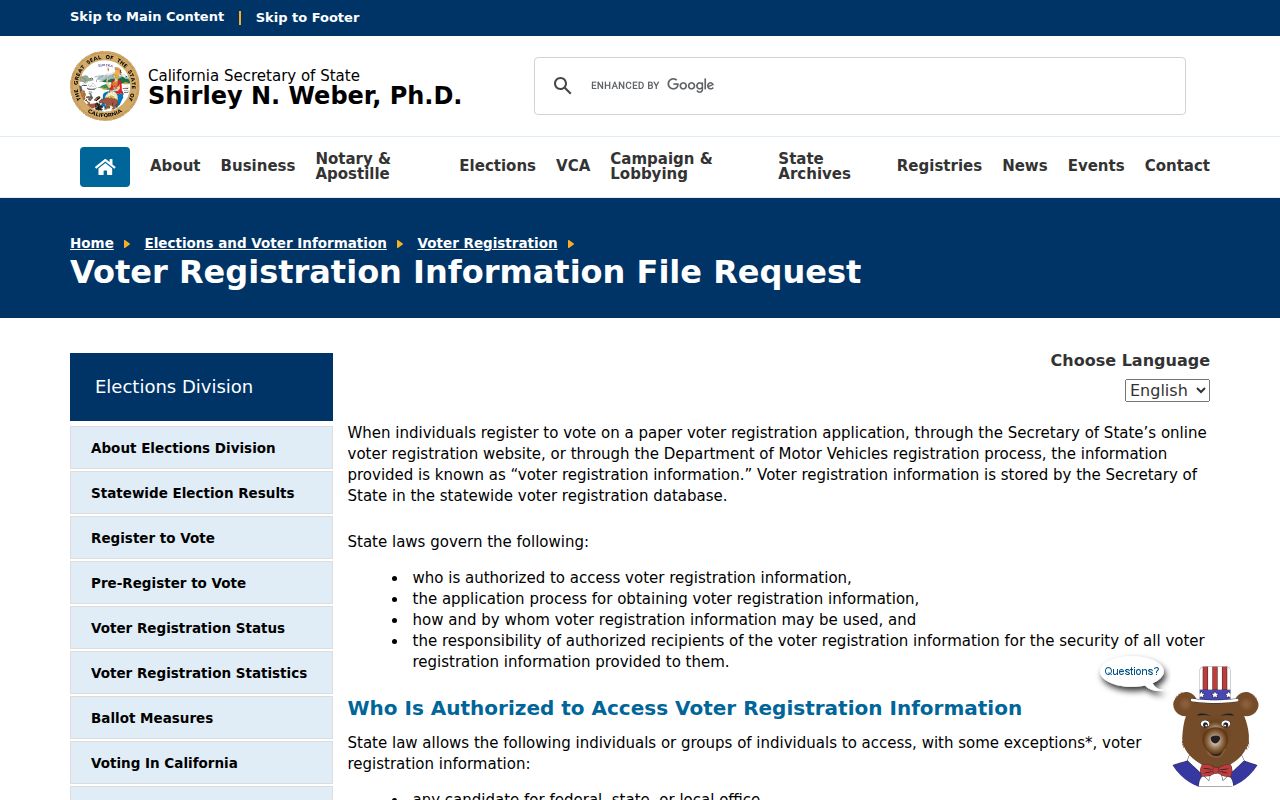
Safe at Home adds another privacy boundary. Qualifying survivors and specified reproductive-health workers receive a substitute mailing address and confidential voter registration, and program records are not public absent authorized government, law-enforcement, or court access. ZIP geography can frame a lawful records question, but it cannot override a confidentiality program.
Boundary check. A postal ZIP can narrow a delivery question. It cannot authorize a ZIP-wide owner browse, expose a protected voter, or replace confirmation from the official custodian.